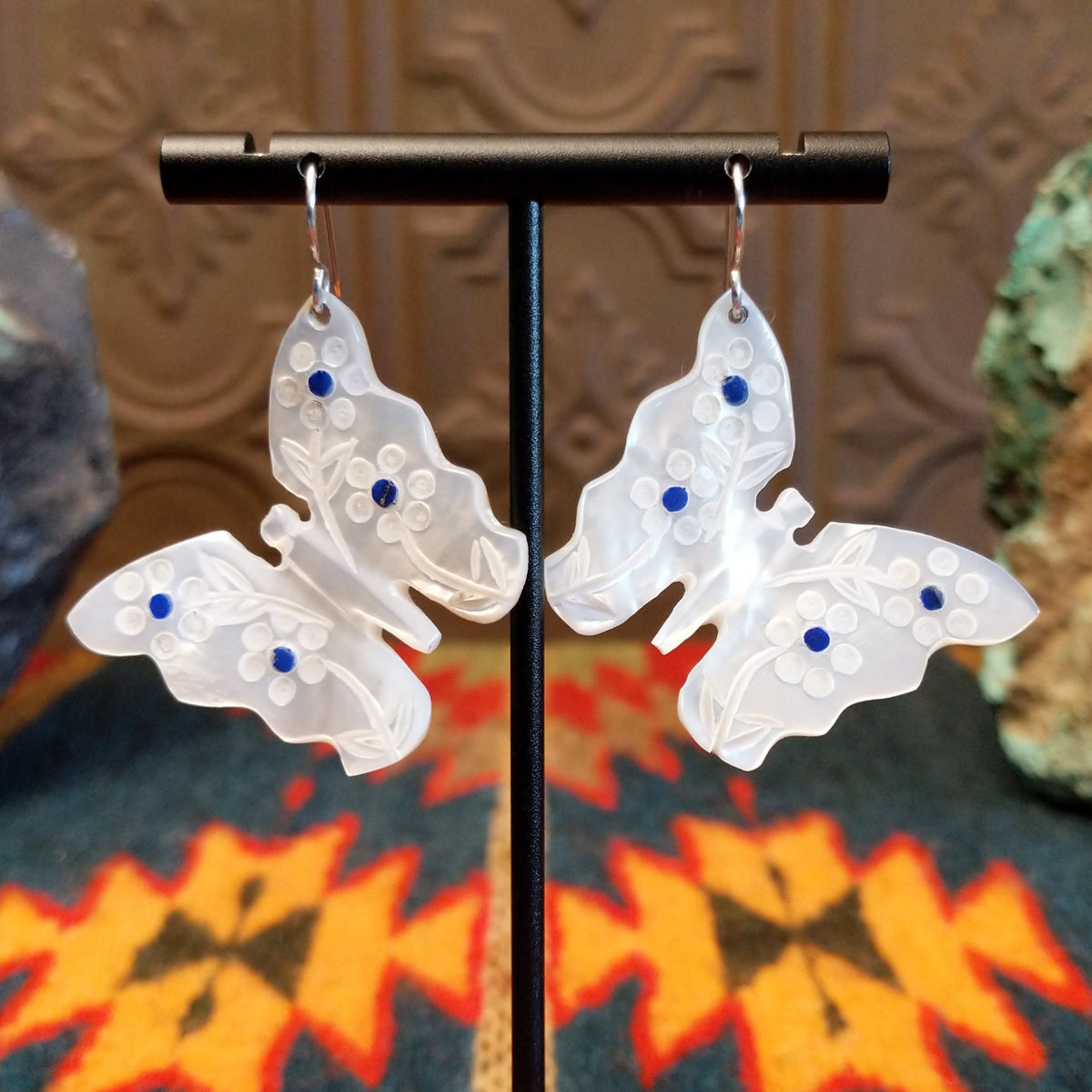
Mother of Pearl
Mother of Pearl, also known as nacre, is a beautiful organic gemstone material treasured for its luminous white coloration and delicate iridescent shimmer. Its soft, pearlescent appearance reflects subtle shades of cream, silver, pink, blue, and green as light moves across its surface.
Formed naturally inside the shells of certain mollusks, Mother of Pearl is composed of thin layers of calcium carbonate and organic material. These layers create its distinctive rainbow-like luster, making it a timeless favorite in fine jewelry and Southwestern designs.
Distinctive characteristics
-
Color: Primarily pearly white, ivory, and cream with subtle iridescent highlights.
-
Appearance: Smooth, luminous, and reflective with a soft rainbow-like shimmer.
-
Composition: Nacre, an organic-inorganic material primarily composed of aragonite, a form of calcium carbonate.
-
Hardness: Approximately 2.5–4.5 on the Mohs scale, depending on the shell.
-
Patterns: Natural variations in color, texture, and iridescence.
-
Jewelry: Popular in sterling silver rings, pendants, earrings, bracelets, necklaces, and Native American inlay jewelry.
Where is Mother of Pearl found?
Mother of Pearl is harvested from the inner shells of pearl-producing oysters and other mollusks found in oceans and freshwater environments around the world.
Important sources include:
-
Australia: Particularly northern coastal waters, known for high-quality white Mother of Pearl from pearl oysters.
-
Indonesia: A major source of pearl oyster shells.
-
Philippines: Tropical waters produce beautiful iridescent shell material.
-
French Polynesia: Famous for pearl oysters that produce darker varieties of Mother of Pearl.
-
China: Produces both freshwater and saltwater Mother of Pearl.